
Introduction:
We must first understand the frame of reference for knowledge that informed Western theories and laws concerning women’s rights. It provides a standard against which to understand Western thought generally and its treatment of women in particular. The foundations of Western knowledge underwent structural changes as people’s encounters with the world came into conflict with their beliefs. The Church exercised intellectual authority over modes of thinking and thus over science, law and legislation. Despotism also found refuge in the Church, which offered it support and protection in the name of God.
It is therefore important to understand this frame of reference and how it changed, even in outline. We need to know how its context produced many of the assumptions about women’s rights and how these gained legal and political authority in Western states.
Conflicts in the West produced intellectual settings and structural changes from which its system of rights and laws concerning women emerged. The East shows superficial resemblance, which has led some intellectuals and legal scholars to adopt Western approaches and graft them onto Eastern intellectual conditions. They have overlooked how differently those approaches originated.
We can speak of differences in context and imprint. Intellectual settings do not coincide even where outward appearances are similar. Human experience can look alike in many respects while differing according to intellectual, doctrinal and philosophical surroundings. A conclusion cannot be stronger than its weakest premise. Its imprint will therefore differ where the underlying conditions differ. Grafting one account onto another can produce incoherent thought and contradictions that damage intellectual and behavioral stability, or what might be called soundness of mind and thought. This is a deep disruption of practical monotheism.
This introduction points to the need for a brief survey of the intellectual roots, what they reveal about structural differences, and the development of law and the contexts in which Western thought about women arose.
Chapter One
What sources does Western knowledge draw on, and what standing do they have? How do they differ from the sources of knowledge in Islamic thought and philosophy?
A methodical study begins by clarifying terms and their meanings. The concept of knowledge, the subject of this chapter, is our point of departure.
Knowledge:
Saliba discusses knowledge in his dictionary. To know a thing is to apprehend it through the senses or by other means. Knowledge is the perception and conception of things. Early thinkers used it in several senses:
Perceiving something through one of the senses.
Knowledge in general, whether as conception or assent.
Apprehending something simple, whether conceiving its essence or affirming something about its states.
Apprehending a particular, whether a particular concept or a particular judgment.
Apprehending a particular by means of evidence.
Perception that follows ignorance.
Knowledge is the first means of preparing ourselves to face the world. Perceiving our surroundings, ourselves and our purposes, and being aware that we perceive them, shapes conduct and relationships. It also provides a basis for rights, duties, values, standards and laws governing individual and social life. Historical knowledge, in particular, allows us to trace individual and social behavior and understand how societies develop and interact with their circumstances.
Knowledge has sources. Knowing them helps us assess its nature, value and truth, or how well it corresponds to the world. We must identify and examine these sources because they structure human thought and guide conduct. This raises questions about how they are known, how they work and what systems of knowledge arise from them, especially those concerning women.
People investigate to answer questions posed by their activities and circumstances. They take different routes in seeking answers. What they learn and take to be true develops into ideas and beliefs that guide their conduct, methods and actions in the world.
In inquiry, people pass from the unknown to the known, from the known to the known, and then from the known back to the unknown in order to answer a question.
The world poses questions whose answers we do not know. Personal experience, too, can raise questions that require investigation. The search for an answer can take several forms:
A researcher may look to the knowledge accumulated in memory through experience, earlier research and information learned or inherited. In seeking the answer the researcher may be influenced by cognitive biases, personal beliefs, surroundings, habits or traditions.
A researcher may try to move beyond their familiar intellectual environment and seek answers outside the framework of their beliefs, community and customs. They can still draw on prior knowledge, adding it to what the new inquiry yields. The risk remains that bias will lead them to make new findings fit old views.
A researcher may suspend categorical prior judgments. Each period raises its own questions, particularly in an age of rapidly expanding information. Suspending judgments need not mean rejecting established knowledge or denying conclusions supported by decisive evidence. The aim is to investigate with as little bias as possible and find an answer that comes close to reality. Approaching a question with minimal preconceived bias may confirm earlier beliefs. This happens after trying new methods, going beyond one’s own assumptions, examining available evidence and considering different answers. Reading diverse views brings other minds alongside one’s own and allows a question to be examined from several intellectual angles.
Some researchers begin in the first manner and reach the third as their methods and intellectual horizons develop. Others begin at the third. Experience adds to knowledge and can enrich it, but it can also become a methodological obstacle or source of bias. Experience should inspire inquiry and reveal what we do not know. It should not be taken as decisive on its own unless corroborated by independent and conclusive evidence.
Researchers sometimes treat their own scholarly experience as conclusive methodological knowledge. I have seen this in particular in research on women. Others may adopt the researcher’s views and make them a method of action for individuals, societies or even states and the world. As we shall see, this has lasting consequences for methods and conduct.
One example is the long conflict with the Church in the West during the Middle Ages. The Church’s understanding shaped Western thought over centuries. People lost their lives for departing from its established views and its interpretation of the Bible. It claimed authority even in science, medicine, logic and philosophy.
Western science developed in reaction to ecclesiastical authority in the Middle Ages. The Enlightenment and the work of many philosophers later shaped the outlook of nations and their relations with religion, nature and humanity. Religion, the unseen and reason gradually lost standing as sources of knowledge. In the author’s view, the result has been the objectification of everything, including human beings, and the sway of relativism and utilitarianism in ethics. The author sees an instance of this during the COVID-19 pandemic, when elderly people were left to face death without assistance.
This does not make every Western achievement a negative one. The philosophical structure developed on materialist premises through a rapid expansion of knowledge in reaction to religion. The Church’s frequently harmful practices contributed to the exclusion of religion as a useful source of law. Faith in human achievement then expanded rapidly, including in philosophy and inquiry into existence, the universe and God. In the author’s view, the pace of change in thought and everyday life cost the West an important point of reference: self-awareness and the ability to learn from experience without bias.
Self-awareness is a starting point for understanding one’s surroundings. Losing it can undermine a researcher’s judgment and lead to deep intellectual biases. One must consider how an experience arose, what followed from it and where it was strong or weak. Haste also marks people who, impressed by Western experience, adopt its scholarship before taking the time to understand it. Political despotism at home, shortcomings in religious institutions, and the entanglement of poverty, ignorance and colonialism produced a sense of inferiority. Under cultural colonialism, this pushed some toward rapid intellectual adoption of Western models. Knowledge cannot be gained through dazzlement, reaction or outside pressure. It grows through deliberation, sustained reflection and gathering evidence from every source, even a source one considers weak.
For example, Jürgen Habermas (born 1929) was one of the secular thinkers who forcefully advocated removing religion from the sphere of the state in the previous century. In reassessing modernity, he later found that churches and religious citizens can contribute proposals to laws that serve society. As a substantial part of society, they have a right to participate. Habermas asks whether political authority can be possible once positive law is fully established, if legitimacy rests neither on religion nor on any metaphysics. He continues: “Even if one grants its legitimacy, doubt remains at the level of motivation. Can we strengthen the foundations of a plural society by subjecting them to a normative background that, at best, is agreed on only formally? That amounts to subjecting them to a particular way of life. Even if one understands cultural and social secularity as a two-way learning process, adherents of Enlightenment traditions and religious teachings both need it in order to reflect on the limits of their respective domains”.
Habermas’s reassessment of religion in politics, social solidarity and legislation for all members of the state reflects a long consideration of the secular state. It led him to recognize that a state can benefit from religion and religious citizens.
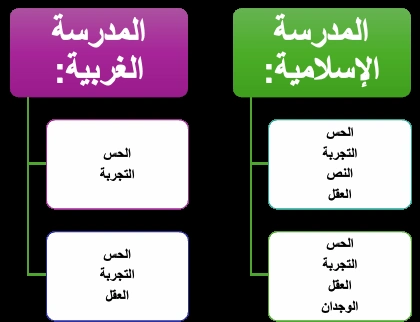
In the author’s account, Western philosophers reacted to the Church by narrowing the sources of knowledge. They evaluated them through their own experience and cognitive biases, reducing them to two:
Sense perception
Experience
Whatever can be observed through the senses or tested through experiment is treated as knowledge. What falls outside them is excluded. There is a quieter rationalist tradition with a growing voice. Its influence is still limited beside the dominant academic view of knowledge, its methods and tools.
In the author’s account, this removed God’s authority in legislation and the role of reason in inquiry directed toward truth. It happened through a long development of philosophical and epistemological debates that were often subject to cognitive bias.
The West and the Worldview:
The term worldview first appeared in Kant’s Critique of the Power of Judgment. Kant (1724–1804) referred to the intuition of the world and explained the act of contemplating it by way of the senses. The Romantics soon gave Weltanschauung another sense, particularly Schelling. He held that it concerns consciousness and nonsensory knowledge, rather than direct observation.
Worldview has recently become common in writing on major existential questions concerning human beings and their relation to the universe, God and nature. The questions are longstanding in Islamic and human thought. Where do I come from? Where am I? Where am I going? Who am I? They lie at the heart of human existence and appeared in scholarly debates in Islamic societies before those debates used the term worldview. Here seeing means intellectual apprehension, rather than visual perception. It is closely related to knowledge. The reference to the world concerns questions about the origin of its existence.
Worldviews can be:
Materialist worldviews
Theistic worldviews
In the author’s account, a materialist worldview prevalent in the West treats existence as matter and a person as a physical body. There is nothing beyond matter. The world has no purpose in being created or existing. The view has no need of a Creator, and even some who acknowledge one assign the Creator no role in governing the universe.
This Western worldview affected how people understood their functions and roles in life.
The human person came to be regarded as a body with material purposes. This shaped views of women’s nature, function, role and place in existence.
Such a worldview implies a set of values, forms of knowledge, behaviors and approaches to social, political and private life in which God is given no legislative authority.
The author sees that exclusion as producing deficiencies in laws and arrangements that shape people’s lives and roles, including women’s. These deficiencies then affected women’s place in ways the author regards as destabilizing the family, society’s central institution. Proposals for absolute equality emerged without attending to differences between women and men or considering that absolute equality can amount to injustice.
Islamic Philosophy and Knowledge:
Islamic philosophy did not traditionally treat epistemology as a separate field under that name. Philosophers discussed reason, texts and the senses as sources of knowledge in logic and philosophy. Epistemology became a distinct title only recently. Earlier philosophical inquiry nevertheless addressed epistemological problems arising in debates of its time.
Muslim philosophers may not have established a separate field of epistemology because reason occupied an established central place in Islamic philosophy.
As Western epistemological schools and ideas entered Muslim countries, Muslim thinkers began presenting independent accounts of epistemology. They treated it as a distinct field of inquiry rather than as new subject matter for Islamic thought, creating new conditions for studying it.
The scholar and philosopher Sayyid Muhammad Husayn Tabataba’i first took the initiative to organize independent epistemological studies in The Principles of Philosophy and the Realist Method.
As questions and debates arose, attention turned to this subject as a field in its own right. The accumulation of theories and problems led to the development of epistemology as a separate discipline, with several schools in the West and the Muslim world.
The Importance of Knowledge:
Knowledge matters because it:
1. Shapes ideas.
2. Guides individual and social conduct.
3. Directly affects awareness and perception.
4. Can significantly strengthen or weaken beliefs.
What Are the Sources of Knowledge?
What Is the Value of Knowledge?
The value of what a person knows depends on how they came to know it. The sources and methods are crucial to evaluating the knowledge obtained.
Relating knowledge to power calls for understanding its quality rather than its quantity. Quality refers to what the knowledge is worth and how well it accords with reality and truth.
Knowledge is a route to power, and power is necessary for justice. Knowledge dispels ignorance and supports development and renewal. It gives individuals and society the understanding needed to confront injustice by clarifying what actual injustice is and how it comes about.
This epistemological introduction matters to women’s issues for the following reasons:
It helps address intellectual and conceptual problems across time, their role in the emergence of new fields, and how Islamic scholarship can engage with those fields methodically.
It is important to know the theory that has shaped European thought and affected Islamic philosophy and identity, whether directly or indirectly.
The nature and logic of knowledge matter because knowledge bears on self-determination.
The study will show how epistemological foundations bear on women’s issues, especially changes in how their roles and functions are understood. The assumption that women have suffered the same injustice in every region was used to universalize proposed ways of ending it. This overlooked differences of intellectual structure and place. Customs vary by location and play an important part in identifying the applicable ruling in Islamic jurisprudence.
Chapter Two
How have women’s issues developed in the West, and what major influences have changed views of women, their roles and their functions?
How did feminist ideas influence what has been called women’s turn toward the self and their separation from the family and society as organic communities?
What problems of knowledge arose in intellectual and philosophical accounts of women, and where did those problems come from?
How have women’s issues developed in the West, and what major influences have changed views of women, their roles and their functions?
Many forces have changed women’s circumstances and roles in the West. In the author’s view, the central Western view remains grounded in its original foundations. Capitalist interests gave rise to the project called women’s liberation to draw the greatest possible benefit from every worker for capitalism and economic globalization.
Western women’s circumstances passed through several stages. Some involved forms of injustice reinforced by religious views of women. Others offered hope that women could move from confinement toward recognition of who they were. The author regards a later stage pursued in the name of liberation as producing more severe injustices.
Women in Christian Thought:
Some statements cited in the article warn against women. The article attributes the following to Saint Tertullian: “She is the devil’s entrance into the human soul and a violator of God’s laws.” It attributes another to Saint Sostam: “She is a necessary evil, a desirable affliction, a danger to family and home, and a calamity in disguise.”
The article reports that an ecclesiastical council in the fifth century considered whether woman was merely a body without a soul. It claims that the council held that women lacked a soul capable of salvation from hell, except for the mother of Christ.
Paul’s first letter to the Corinthians says (9:11 in the article’s reference), “Man was not created for woman, but woman for man” (1 Cor. 9:1 in the article’s citation).
The author acknowledges that the Bible honors virtuous women, encourages kindness to mothers and recognizes their standing. Such teachings are shared by the revealed religions and accord with human nature and reason.
These teachings fall outside the focus here. The study examines religious understandings of women in order to understand the place they were given and identify what kept them from participating in society for a considerable time.
It is commonly said that the West freed itself from the authority the Church exercised in the Middle Ages, that modern Western civilization separates religion from the state through secularism, and that it relies on sense perception and experiment to gain knowledge.
The author questions that account, citing the view that “religious and political authority are twins that cannot be separated. Despite claims about the separation of church and state in the West, Christianity plays a considerable political role.
“In 1982 Pope John Paul II met privately with former U.S. President Ronald Reagan. They agreed on full cooperation between U.S. military power and the Vatican’s spiritual influence to bring down what Reagan called the evil empire, meaning the Soviet Union or communism. The American and papal alliance worked to end communism around the world. In 1989 the Pope received Gorbachev at the Vatican and completed the task of ending the Soviet Union from within the Kremlin.” The author argues that the Church still provides spiritual guidance and sanction to politicians and has substantial influence in the Christian West. Its continued political role can also bear on women’s access to political authority. The author points to the limited number of European women who reached decision-making positions despite women’s early participation in European public life. In the United States, which sought to promote its values on women’s issues internationally, no woman has become president. Hillary Clinton and Kamala Harris led in opinion polls, and the author counts their sex as a major factor in their defeats.
The central concern is that women be treated as human beings and that their rights follow from their humanity. We should also avoid judging earlier ages entirely by present-day ideas. Human beings have undergone intellectual and cultural change throughout history. Intellectual conditions, circumstances, times and places differ, so current beliefs cannot simply be applied to earlier societies.
Women in the Middle Ages:
“Medieval women worked in the fields and tended animals alongside men, in addition to performing household work. With urban development and new occupations, women assisted their husbands in trades and crafts and sometimes represented or took their place. Fathers taught their crafts to daughters and sons. By the thirteenth century women were working in weaving and sewing and also in tanning and processing leather and metals. Women were generally paid less than men, a factor in their participation in urban uprisings. In the fifteenth century women’s work was blamed for men’s unemployment. European laws then barred women from exercising trades. By the end of the sixteenth and beginning of the seventeenth century women had been excluded from professional life.
“The age of mercantilism reduced women’s opportunity for active participation. By the Golden Age, women were confined to the home to raise children, perform household work and attend to their husbands. Intellectual and cultural life presents a different picture. In the Middle Ages women had some degree of cultural equality with men. Education was generally unavailable to men and women of the lower classes.
“In the upper classes, women sought access to education, previously reserved for men, from the sixteenth century onward, including in Burgos and Palencia. In the eighteenth century the distinction between women and men in the right to education was removed. Schools were established for girls as urban life grew, though fewer girls attended than boys. Women were excluded from universities, apart from the independent school at Salerno, Italy, which awarded qualifications in women’s medicine from the tenth century. Other major European cities did not follow until the end of the thirteenth century, when women were allowed to practice surgery, otolaryngology and gynecology. The Middle Ages were also associated with stories of witches being pursued by the Inquisition. Punishments from the seventh to the thirteenth century included demands for repentance and fines.”
The Danish writer Wieth Kordsten described the medieval Catholic Church’s approach to women as one of limited concern for European women based on the belief that they ranked second.
According to the account cited in the article, a meeting in France in 586 CE debated whether women should be regarded as human. Those present concluded that they were human and had been created to serve men. Article 217 of French law read:
“A married woman, even if her marriage was contracted under separation of property, may not:
Make gifts, transfer property, mortgage it or acquire property for payment or without payment unless her husband participates in the agreement or consents in writing.”
The article reports that Henry VIII forbade English women from reading the Bible. It states that women were not counted as citizens until 1850 and had no individual legal rights until 1882.
The historian Friedrich Heer says that women in medieval Western Europe had no rights, that the law was made for men, and that men alone had authority in the family, society and state. One rule was that a “woman’s voice is not to be heard in public.” There was an exception for inheritance: a woman could inherit from her father or husband.
The historian Power explains that English law distinguished a noblewoman who was unmarried or widowed from ordinary people. Her rights and duties could equal a man’s. She could hold farmland, draw up a will or contract, sue or be sued. Upon marriage, these rights passed to her husband.
An older noblewoman without a husband could wield considerable influence and authority and occupy a prominent position in her community. Marriage was a different matter. A girl from the upper ranks of society had no say in her choice of spouse. Material interests governed the decision from beginning to end. Marriages of convenience were commonplace in the Middle Ages, often dictated by interests in land. In approving the marriage of a daughter or a minor under their guardianship, the great feudal lords took as their guide the maxim, “I know of no obstacle to marriage between the holders of great fiefs.”
The author sums up medieval European attitudes toward women with a statement attributed to Tertullian, described here as one of the leading European thinkers of the period: “[Woman] is the devil’s gateway into the human soul, the breaker of God’s law, and the disfigurer of God’s image.”
The Church cared for the family in accordance with its teachings, and the family remained stable and retained its role in raising children. This relative stability was reflected in the breadth of family networks, which extended to the relatives of both spouses and to others.
European women in the modern era and the role of feminist movements in centering the self. What epistemological problems arose in intellectual and philosophical theorizing about women, and what were their origins?
When the French Revolution broke out in the modern era, Europeans regarded it as the mother of revolutions and of freedoms, and it became a source of pride for Europe’s Christian nations. Yet it treated women as legal minors unable to manage their own affairs until laws were amended in their favor and they gained some rights. The author recounts a meeting in France in 1586 CE to discuss whether women were human. After deliberation, the participants reportedly decided that a woman was human but had been created to serve man. In February 1938 CE a law repealed earlier restrictions on certain financial transactions by French women. For the first time, a French woman was allowed to open a current account in her own name. In England, the author states, women were not counted as citizens until 1850 CE and lacked individual rights, including the right to own property, until 1882 CE. Oxford University gave women and men equal rights in its clubs and students’ union only after a decision issued on 26 July 1964 CE.
“The question of equality between men and women did not arise in the wake of the Industrial Revolution and factories’ need for labor from both sexes. Its roots reach back to the French Revolution of 1789 and its ideals of liberty, equality, and fraternity. Women felt that they faced a real injustice, shaped by the prevailing culture and unjust laws. They called for wider, better, and equal access to education and for legal equality at work and in holding government posts. Among the slogans they raised was, ‘If a woman has the right to mount the scaffold, she also has the right to mount the speaker’s platform.’”
With slogans like these, which swept through Europe and America in the eighteenth century, the women’s movement in Europe entered the workplace and experienced the accompanying changes. It began demanding day care and child care, equal pay, laws protecting working women, and the rights to own property, divorce, pursue higher education, practice medicine, vote, and run for office.
In 1848 the first women’s convention in the United States was held at Seneca Falls. Its participants announced their desire to organize their efforts in a movement for social reform.
Women’s social demands were the defining feature of this phase. Their circumstances nonetheless persisted, and governments resisted women’s demands even when those demands were fair and legitimate. This continued until the early twentieth century, particularly around the First World War, which increased women’s public presence and began to tip the balance in favor of women’s movements. European women became a visible political force. Their influence showed in the First and Second World Wars and in the popular pressure they exerted to secure their rights. Although progress was slow, women changed the course of their own history and made gains once unimaginable after the injustices experienced under ecclesiastical rule.
Individualism and the centrality of the self
In attempting to define individualism, Dr. Ali Watfa writes:
Individualism refers to a social and cultural reality in which people, as individuals, can choose how to live and behave and practice their beliefs. It also refers to a society whose social and judicial order protects people’s rights as individuals, with no compulsion to sacrifice or relinquish what they believe.
Individualism differs from individuality. The former asserts the primacy of the individual over society, the state, and the group, placing the individual at the center of everything in a way that undermines their relationships. The individual recognizes no claims others have upon them and no duty to others beyond what the law imposes. Individuality, by contrast, takes the rights of the individual seriously alongside their relationships and the rights and duties these entail, including relations with society, the state, and the family. It respects each person’s existence and distinct personality. The individual has the right to exercise judgment, analyze, and take positions independently of the collective and of society in ways that accord with their personality, provided these actions do not adversely affect their community or harm the public interest.
Individualism is a moral stance, a political philosophy, and a social outlook that asserts the moral worth of the individual. It encourages people to act on their aims and desires so that their values are independent and they rely on themselves. It takes the defense of individual interests as a basic principle that ranks above the concerns of states and groups. Individualists oppose outside interference with those interests by society or institutions such as governments. Individualism often stands in opposition to dictatorship or collectivism.
Calls to put the self above everything, to give it priority in one’s care, and to seek personal happiness before all else express the same principle of individual primacy. Slogans such as “Be yourself” and “I come first” revolve around the ego and the self and frame its needs in material terms.
This emphasis on individual rights is also pursued without developing a system of rights and duties that accounts for the network of functional and reciprocal relationships in which each individual is embedded. Some of these relationships arise naturally and others from social institutions and conventions.
Freedom, a fundamental right of the individual, is one example. Although freedom is an innate natural right, we cannot consider it an individual right apart from society, institutions, and law.
An individual is born with two dimensions, one personal and the other juridical. The first concerns the self and the person as such, with a set of rights and a set of duties, since every right involves a corresponding duty. The second consists of the relationships and associations that a person enters after birth, both in fact and in their recognized capacity as a member of society. These relationships confer rights and impose duties.
Balancing rights and duties and individual and social rights gives the individual a clear sense of their relationships and the limits set by law and rights. This is essential to order and development and to an environment in which people interact and spur one another to progress, rather than competing in ways that bring them into conflict. One form of competition releases the potential of individuals and society. The other draws both into destructive and deadly conflicts.
The balance is between developing and caring for the self in its qualitative, quantitative, spiritual, and material aspects, while setting aside and actively resisting the overweening ego, and integrating into society and interacting with it in the work of change, development, and service to humanity.
Individualism as a Western philosophical and ethical outlook laid a foundation for many extreme feminist ideas, particularly as the distance between feminist slogans and women’s actual family, social, political, economic, and legal circumstances in the West widened. This was one of the starting points of Western radical feminism.
The emergence of radical feminism
Modern American feminism in its early stages did not oppose marriage. In the late 1960s and early 1970s, however, a wave of radical feminism came to oppose the institution of marriage openly. In their influential 1968 pamphlet, Toward a Female Liberation Movement, Beverly Jones and Judith Brown asserted that “the married woman knows that love is, at best, inadequate compensation for her unnecessary and peculiar heritage of oppression.” In 1969 Marlene Dixon, a professor of sociology at the University of Chicago, declared, “The institution of marriage is the chief vehicle for the perpetuation of the oppression of women. It is through the role of wife that the subjugation of women is maintained.”
In 1970 the writer Robin Morgan called marriage a “slavery-like practice. We cannot destroy the inequities between men and women until we destroy marriage.” In 1971 the Minnesota radical feminists Helen Solinger and Nancy Lehmann issued a statement declaring, “Male society sold us a bill of goods about marriage. Now we know it was the institution which failed us, and we must work to destroy it.…” In 1981 the writer Vivian Gornick, a tenured professor at the University of Arizona, argued that the choice to serve and protect a family and to plan to become a homemaker was a choice that ought not exist, and that the heart of radical feminism lay in changing it.
Where did European women stand after proclaiming their liberation and demanding their rights and gender equality?
Discussing women in the modern West, the writer and thinker Marwa Ahmad Ibrahim states, “It is enough to note that an American woman wrote a book in 1986 CE titled A Life of Humiliation: The Myth of Women’s Liberation [title translated from the Arabic]. On the basis of detailed statistics, she asserted that a woman’s monthly pay in the United States was no more than 64% of a man’s pay for the same work. In Sweden the figure was only 81%. On incidents of rape, which the author attributes to women’s supposed freedom, reports estimated an American woman’s risk of rape at 1 in 5 and conservative estimates put it at 1 in 7. Even on the most favorable estimate, then, one in seven women in America is raped.”
On 23 July 2024 CE Vikram Dodd wrote about violence against women in the British newspaper The Guardian. The article summarizes his report as follows:
Police chiefs warned that male violence against women is a grave epidemic and amounts to a “national emergency,” affecting nearly two million women and girls every year. One in 12 women in England and Wales is a victim of a violent crime such as stalking, harassment, rape, or domestic abuse. The number of recorded offenses had risen by 37% over the previous five years, and perpetrators were getting younger. The National Police Chiefs’ Council disclosed these figures in its first national assessment of the scale of violence against women and girls, issued on Tuesday, 23 July.
The assessment states, “We estimate that at least 1 in 12 women in England and Wales is a victim of a crime involving violence against women and girls every year. That amounts to 2,000,000 victims. An estimated 1 in 20 adult men in the two countries commits such a crime each year, or approximately 2,300,000 perpetrators. These are conservative estimates, because we know many victims do not report crimes and police usually see only the tip of the iceberg.”
The National Police Chiefs’ Council assessment also stated that one in six murders in England and Wales was related to domestic abuse and that crimes involving violence against women and girls accounted for 20% of all crimes recorded by police. The assessment said that the true overall figure could be twice as high.
Recorded cases of violence against women and girls rose by 37% between 2018 and 2023, to 3,000 attacks a day. Perpetrators were getting younger, dispelling hopes that violence against women and girls would decline over time. Sexual harassment, rape, and sexual exploitation of children increased by more than 400% between 2013 and 2022. At the same time, offenses committed by minors increased by 55.6% relative to all crimes involving violence against women and girls, as reported in the Arabic article. The average victim was 13 years old, and the average perpetrator was 15.
Louisa Rolfe, an assistant commissioner in the London Metropolitan Police, said that there may be considerably more victims than reported because many crimes go unreported. “I think the number is higher than that,” she said. “I think four million is closer to the reality.” Jess Phillips, described in the article as the shadow minister for domestic violence and safeguarding, said, “The scale of violence against women and girls in our country is intolerable, and this government will treat it as the national emergency it truly is.”
The theory of sexual objectification
Objectification theory (Fredrickson and Roberts, 1997) proposes that many women are sexually objectified and treated as objects whose value is determined by their usefulness to others. Sexual objectification occurs when attention is drawn to a woman’s body or parts of it, apart from her personhood, and she is regarded primarily as a physical object of men’s sexual desire (Bartky, 1990). According to objectification theory, women’s sexual objectification can contribute to mental health problems that affect women disproportionately, such as eating disorders, depression, and sexual dysfunction, through two main pathways. The first is direct and overt and consists of experiences of sexual objectification. The second is indirect and subtle and consists of women internalizing those experiences, a process known as self-objectification (Fredrickson and Roberts, 199[year incomplete in source]).
Fredrickson and Roberts (1997) argued that women internalize this external gaze to varying degrees and begin to objectify themselves by seeing themselves as objects to be looked at and judged by appearance. Self-objectification is evident in the greater importance given to appearance-based attributes over competence-based attributes. It also shows in how closely a woman monitors her appearance and how she experiences her body in terms of how it looks (McKinley and Hyde, 1996; Noll and Fredrickson, 1998). Objectification theory also proposes a mediating model in which adverse psychological outcomes explain how self-objectification leads to psychological risks for women. More specifically, Fredrickson and Roberts (1997) suggested that self-objectification can increase women’s anxiety about physical appearance, meaning fear of when and how their bodies will be looked at and judged. It can reduce opportunities for peak motivational states or experiences of flow and lessen awareness of internal bodily sensations such as hunger, sexual arousal, and stomach contractions. It can also make women more likely to experience body shame, an emotion arising from being measured against a standard.
Studies of women’s personal experiences suggest that exposure to sexual objectification is a regular occurrence for many women in the United States. For example, in a series of diary studies, Swim and colleagues (Swim, Cohen, and Hyers, 1998; Swim, Hyers, Cohen, and Ferguson, 2001) found that 94% of female college students reported at least one instance of unwanted, distressing sexual comments or behavior during a semester. Women reported more experiences of sexual objectification than men, and sexual objectification emerged as a distinct element of everyday sexism. Other researchers also found such experiences to be common in other samples of women (Hill and Fischer, 2008; Kozee and Tylka, 2006; Kozee et al., 2007; Moradi, Dirks, and Matteson, 2005). White women and women from racial and ethnic minorities reported comparable levels of personal experiences of sexual objectification (for a review, see Moradi and Huang, 2008), as did heterosexual women and women from sexual minorities (Hill and Fischer, 2008; Kozee et al., 2007). Women’s self-reported experiences of sexual objectification have also been associated with negative psychological outcomes, including self-objectification, habitual body surveillance, body shame, internalization of the thin ideal, reduced interoceptive awareness, and eating disorders in both lesbian and heterosexual women (Hill and Fischer, 2008; Kozee and Tylka, 2006; Kozee et al., 2007; Moradi, Dirks, and Matteson, 2005).
The author concludes that women’s progress in modern Europe has been material and outward, emptied of its moral and human dimensions. It has centered on female sexuality, which the capitalist system exploits and puts to use, moving women away from what the author considers their true role and into a world of equality with men. This comes despite psychological and biological differences, as demonstrated, the author argues, by modern studies. For the author, justice is the basis of relations between men and women, as distinct from equality.
Why, then, have Western women fallen short, even after freeing themselves from patriarchal and authoritarian rule and becoming real contributors to national income, which has a substantial and positive effect on public policy?
Western ideology and the worldview its epistemology supports underlie major intellectual differences and debates throughout the world. As argued earlier, epistemology has a structural part in shaping ideas and human conduct. In Western thought, sense perception and experience are the sources of knowledge, with sense perception as the primary source of human knowledge at the level of conception and experience as its source at the level of assent. The West went on to develop its intellectual and political project and worldview into a political system organized around a triad: democracy, liberalism, and capitalism. The first provided the system of government. The second took the individual as the basis of society and affirmed the primacy of the individual. The third supplied the economic system. What prompted human society to consider a system of knowledge that could provide a basis for defining an ideology amid the vastness of life may be this question: What social system is fit for humanity and will enable people to flourish together?
The West faced this question after its experience of ecclesiastical rule, which curtailed freedoms and established the Inquisition, a stain on the medieval period. The result was a Western revolt against everything religious, a reaction to the Church’s treatment of Western society. The revolt adopted an ideology that “overthrew a form of injustice in economic life, dictatorship in political life, and the rigidity of the Church and its like in intellectual life. It made the instruments of rule and influence available to a new ruling group that replaced the previous one and carried out the same social role in a new way”.
The new system was capitalist democracy. In the words of the late Muhammad Baqir al-Sadr, it was founded on boundless faith in the individual and the conviction that their private interests, left to themselves, would naturally guarantee the interests of society in every sphere. The purpose of the state was to protect individuals and their private interests, so its activities and powers could go no further than this aim.
Capitalist democracy can be summed up in its declaration of four freedoms: political, economic, intellectual, and personal.
In my view, the world moved toward economic capitalism, the gateway through which the great powers came to dominate the world. The other freedoms became subsidiary and lost their standing as principles in the new Western system. Those powers put all available human capacities, women’s and men’s alike, to work in production.
Women’s political, legal, and social activism in the West today shows the extent of women’s struggles and how far they remain from the ideal they imagined after the Western revolt against the Church and the removal of all religion from public life. “The English novelist Virginia Woolf (1941) and the French writer Simone de Beauvoir (1986) tackled women’s concerns. They engaged with women’s suffering and aspirations, spoke of finding ways to address the human conscience, marital problems, and the urge to demean others, and explicitly called for equality between women and men. They also called for women to be given the same essential and appropriate choices available to men regardless of sex or race. In calling for women’s liberation and equality with men, Beauvoir stressed the need to abandon the ideal of the Eternal Feminine, which reflects an inherited conception of women. Scientific knowledge confirms the soundness of Woolf’s and Beauvoir’s arguments for giving women the opportunity to establish themselves and for building civilization through the active participation of men and women together, without retreating into fantasies of an all-male society without women or an all-female society without men. The relationship should therefore be interactive and complementary, free of either domination or forced unity”.
Bernard Shaw noted that the capitalist system weighed more heavily on women than on men in some respects, especially socially and politically.
Al-Ruwaili noted that anyone who traces the history of Western thought can see that it subordinated women and constructed a history of knowledge around men, who were presumed capable of pursuing knowledge without a supposedly subjective emotional influence. In this long tradition, gender and the sexual constitution of the human being came to be confused. The former corresponds to the social and psychological concept of Gender. The latter corresponds to the existential and biological concept of Sex. The confusion became entangled with questions of politics, social structure, and other social concepts. Gender studies set out to uncover and remove the causes of this confusion.
Although Western intellectuals rose up and professed that women should be liberated from ecclesiastical oppression, granted their rights, and made equal to men, statements by some Western thinkers after the revolution give no evidence that they held that belief in earnest or acted on it. Women’s liberation remained a slogan and has yet to be put into practice, the author argues.
Raman Selden is one example. He considers men more entitled than women to represent humanity and identifies five areas of sexual difference: life science or biology, experience, discourse, the unconscious, and social and economic conditions. Selden says men came to dominate all five areas.
From the author’s perspective, Western civilization’s material progress offered women no comparable advance in terms of their humanity. Discriminatory practices disregarded competence and creativity as the basic grounds for judging people on their own abilities and accomplishments, irrespective of sex. This gave rise to highly active women’s movements under the heading of feminist criticism, which I see as a reaction to discrimination against women in Western society. Excess became a prominent feature of this movement. It reinforced the idea that a woman is her body and granted that body full scope to act in social, political, economic, and other fields. Western women thus fell into a trap at least as dangerous as the one they faced in the Middle Ages, perhaps more so. They did not find a way to emerge and flourish as human beings in their own right, beyond their bodily existence.
In the second part of this study, we will examine women’s status and personhood from pre-Islamic Arabia to Islam and survey some questions regarding women’s personhood in Islamic jurisprudence.
Sources
1. Abu Zayd, Samir. Science and the Arab Worldview. Centre for Arab Unity Studies, Beirut, Lebanon, 1st ed., 2009 CE.
2. Saadallah, Dr. Muhammad Salim. The Philosophical Foundations of Poststructuralist Criticism. Dar al-Hiwar for Publishing and Distribution, Latakia, Syria, 1st ed., 2013 CE.
3. El Saadawi, Nawal. Women, Religion, and Ethics, a series of articles in the women’s newspaper Nour. Dar al-Fikr, Damascus, Syria, 1421 AH.
4. Selden, Raman. Contemporary Literary Theory. Dar Quba, Cairo, Egypt, 1998 CE.
5. Szymanski, Dawn. Sexual Objectification. Article available at https://www.apa.org/education-career/ce/sexual-objectification.pdf
6. Shaw, Bernard. The Intelligent Woman’s Guide to Socialism, Capitalism, Sovietism, and Fascism. Translated by Omar Makari. No edition specified.
7. Al-Sadr, Muhammad Baqir. The Islamic School. Dar al-Ta’aruf, Beirut, Lebanon, 1990 CE.
8. Saliba, Jamil. Philosophical Dictionary. Dar al-Kitab al-Lubnani, Beirut, Lebanon, 1982 CE.
9. Encyclopaedia Britannica
https://www.britannica.com/explore/100women/profiles/simone-de-beauvoir#:~:text=Simone%20de%20Beauvoir%2C%20in%20full,Temps%20modernes%2C%20a%20monthly%20review.
10. A History of Women in the West (Histoire des femmes en Occident). Edited by historians Georges Duby and Michelle Perrot, vol. 2, pp. 350–420, and vol. 3, pp. 120–180.
11. The Heritage Foundation website, in English: https://www.heritage.org/welfare/report/why-congress-should-ignore-radical-feminist-opposition-marriage
12. Egyptian State Information Service website: https://sis.gov.eg
13. Habermas, Jürgen, and Joseph Ratzinger (Pope Benedict XVI). The Dialectics of Secularization: On Reason and Religion. Arabic translation and introduction by Hamid Lashhab. Dar Jadawel, Beirut, Lebanon, 1st ed., 2013 CE.
14. Al- Ruwaili, A life: journal of comparative Peotics, No 8,1988: 98-99
Footnotes
- Saliba, Jamil. Philosophical Dictionary, vol. 2, p. 393.Return to the text
- Ibid.Return to the text
- A tendency to make stereotyped and subjective judgments or assumptions about a subject without being aware of doing so. Cognitive bias affects judgment, often producing partial, subjective, and inaccurate assessments.Return to the text
- Jürgen Habermas, a contemporary German philosopher and sociologist (born 18-06-1929 in Düsseldorf), is considered among the most important contemporary thinkers on sociology and politics. Born in Düsseldorf, Germany, he still lived in Germany at the time of the article. He is one of the leading theorists of the Frankfurt School of critical theory. He has written more than fifty works on subjects in philosophy and sociology and developed the theory of communicative action.Return to the text
- Laicism or French secularism, laïcité in French (pronounced [la.isiˈte]), describes the separation of religion from the affairs of government and state, and the noninterference of government in religious affairs. It has existed since early in modern French history, on the basis of the 1905 CE French law separating Church and state. Its interpretation was extended to include equal treatment of all religions and was defined more specifically in 2004 CE.Return to the text
- Jürgen Habermas and Joseph Ratzinger. The Dialectics of Secularization: On Reason and Religion, p. 46.Return to the text
- Abu Zayd. Science and the Arab Worldview, p. 81.Return to the text
- Dr. Nawal El Saadawi. Women, Religion, and Ethics, a series of articles in the women’s newspaper Nour.Return to the text
- A BBC report of 24 October 2024 noted that more than half of those who had served as U.S. presidents had previously served in one or both chambers of Congress. Some Americans still saw women’s representation in the country’s highest legislative body as low compared with men’s. At the start of the current U.S. Congress in 2023, 25 women were sworn in to the 100-seat Senate, below the previous Congress’s record of 26. Women held 28.7% of the 435 seats in the House of Representatives. A Pew Research Center report indicated that despite rising representation of women in Congress, 53% of Americans still believed there were too few women in top political positions in the United States. Many also believed that women candidates faced greater obstacles than men in reaching those positions. Experts said that the absence of a woman president in American history did not show that women candidates lacked broad public support. These candidates faced the challenge of a complex electoral system that requires the successful candidate to secure a majority in the Electoral College. Although many Americans believed women deserved the same opportunities to lead as men, gender bias remained in parts of American society, making it harder for women to reach the country’s highest office. Some university studies indicated that stereotypes about women could harm their prospects of being elected president. Another factor might be “pragmatic bias,” in which people withhold their vote from a woman candidate they prefer because they fear she will have difficulty winning or cannot win, simply because they believe others will not support her.Return to the text
- A History of Women in the West (Histoire des femmes en Occident). Edited by historians Georges Duby and Michelle Perrot, vol. 2, pp. 350–420, and vol. 3, pp. 120–180.Return to the text
- Eileen Power was a British academic, historian, teacher, and writer. She was a member of the Medieval Academy of America.Return to the text
- Tertullian (Latin: Tertullianus, c. 160–220 CE) [3] was an early Christian writer of Punic Amazigh background and the first to write Christian works in Latin. He played a significant role in defending Christianity and opposing heresies. He has been called “the father of Latin Christianity” and “the founder of Western theology.”Return to the text
- Dr. Khadija Karrar al-Sheikh al-Tayyib Badr. The Family in the West: Why Its Conceptions and Functions Changed, a critical and analytical study. Dar al-Fikr, 1st ed., 2009 CE, pp. 138, 139.Return to the text
- Source: Egyptian State Information Service website, https://sis.gov.egReturn to the text
- A Syrian researcher and academic, professor of the sociology of education at Kuwait University, editor-in-chief of the journal Naqd wa Tanwir (Criticism and Enlightenment), and a member of the Arab Writers Union. His work includes numerous books, translations, and peer-reviewed studies.Return to the text
- The Heritage Foundation website, in English: https://www.heritage.org/welfare/report/why-congress-should-ignore-radical-feminist-opposition-marriageReturn to the text
- Dawn Szymanski. Sexual Objectification. Article available at https://www.apa.org/education-career/ce/sexual-objectification.pdfReturn to the text
- Dawn Szymanski. Sexual Objectification. Article available at https://www.apa.org/education-career/ce/sexual-objectification.pdfReturn to the text
- Sayyid Muhammad Baqir al-Sadr. The Islamic School, p. 16.Return to the text
- Encyclopaedia Britannica, https://www.britannica.com/explore/100women/profiles/simone-de-beauvoir#:~:text=Simone%20de%20Beauvoir%2C%20in%20full,Temps%20modernes%2C%20a%20monthly%20review.Return to the text
- Dr. Muhammad Salim Saadallah. The Philosophical Foundations of Poststructuralist Criticism, p. 180.Return to the text
- Bernard Shaw. The Intelligent Woman’s Guide to Socialism, Capitalism, Sovietism, and Fascism. Translated by Omar Makari, p. 352.Return to the text
- Al- Ruwaili, A life: journal of comparative Peotics, No 8,1988: 98-99.Return to the text
- Raman Selden. Contemporary Literary Theory, pp. 189–190–191.Return to the text
References
- Abu Zayd, Samir. Science and the Arab Worldview. Centre for Arab Unity Studies, Beirut, Lebanon, 1st ed., 2009 CE.
- Saadallah, Dr. Muhammad Salim. The Philosophical Foundations of Poststructuralist Criticism. Dar al-Hiwar for Publishing and Distribution, Latakia, Syria, 1st ed., 2013 CE.
- El Saadawi, Nawal. Women, Religion, and Ethics, a series of articles in the women’s newspaper Nour. Dar al-Fikr, Damascus, Syria, 1421 AH.
- Selden, Raman. Contemporary Literary Theory. Dar Quba, Cairo, Egypt, 1998 CE.
- Szymanski, Dawn. Sexual Objectification. Article available at:
- https://www.apa.org/education-career/ce/sexual-objectification.pdf
- Shaw, Bernard. The Intelligent Woman’s Guide to Socialism, Capitalism, Sovietism, and Fascism. Translated by Omar Makari. No edition specified.
- Al-Sadr, Muhammad Baqir. The Islamic School. Dar al-Ta’aruf, Beirut, Lebanon, 1990 CE.
- Saliba, Jamil. Philosophical Dictionary. Dar al-Kitab al-Lubnani, Beirut, Lebanon, 1982 CE.
- Encyclopaedia Britannica
- https://www.britannica.com/explore/100women/profiles/simone- de-beauvoir#:~:text=Simone%20de%20Beauvoir%2C%20in%20 full,Temps%20modernes%2C%20a%20monthly%20review.
- A History of Women in the West (Histoire des femmes en Occident). Edited by the historians
- Georges Duby and Michelle Perrot. Vol. 2,
- pp. 350–420, and vol. 3, pp. 120–180.
- The Heritage Foundation website, in English:
- https://www.heritage.org/welfare/report/why-congress-should-ignore-radical- feminist-opposition-marriage
- Egyptian State Information Service website: https://sis.gov.eg
- Habermas, Jürgen, and Joseph Ratzinger (Pope Benedict XVI). The Dialectics of Secularization: On Reason and Religion. Dar Jadawel, Beirut, Lebanon, 1st ed., 2013 CE.
- Al- Ruwaili, A life: journal of comparative Peotics, No 8,1988: 98-99